
How to Choose the Right Decorative Stone for Your Landscape
If you’ve walked down the stone aisle at any landscape supply yard, you'll see the problem right away. River rock here, pea gravel there, a pallet of marble chips, and a pile of boulders in the corner. They all look nice in the bin. But which one actually works in your yard?
We hear that a lot from homeowners planning a garden bed, a walkway, or a dry creek bed. Picking the wrong stone isn't the end of the world. Still, it can mean a walkway that shifts underfoot, a garden bed that grows more weeds instead of fewer, or a color that clashes with your siding the moment it's delivered, not to mention some buyer’s regret that’ll haunt you every time you look at your landscaping.
At Ebyland, we've been helping homeowners across the Cumberland, MD area match the right stone to the right project for years, and this guide walks through everything we'd tell you in person.
TL;DR - How to Choose the Right Decorative Stone for Your Landscape
- Choose stone based on your specific project: river rock and pea gravel for paths; crushed stone for structural bases; and boulders for accents.
- Consider color, size, texture, and drainage when selecting, ensuring the stone complements your home's style.
- Use landscape fabric beneath all stone installations to prevent weeds and maintain a clean appearance.
- Evaluate stone versus mulch: while stone has higher upfront costs, it requires less maintenance and doesn't need annual replacement.
- Calculate material needs by measuring area and depth, and always order 10% extra to account for settling and irregular shapes.
6 Types of Decorative Stone and Where They Shine
Every type of stone has its uses in landscaping. From different sizes to shapes, stone can be used to make a statement or shore up your soil from erosion. Here are the most commonly used types:
- River rock. Smooth and rounded from years of tumbling in moving water, river rock ranges from under an inch to a foot or more across. It's comfortable underfoot, which makes it a natural fit for walkways, borders, and water features. Because larger pieces leave gaps, it's not the best weed blocker in garden beds unless you stick to smaller sizes.
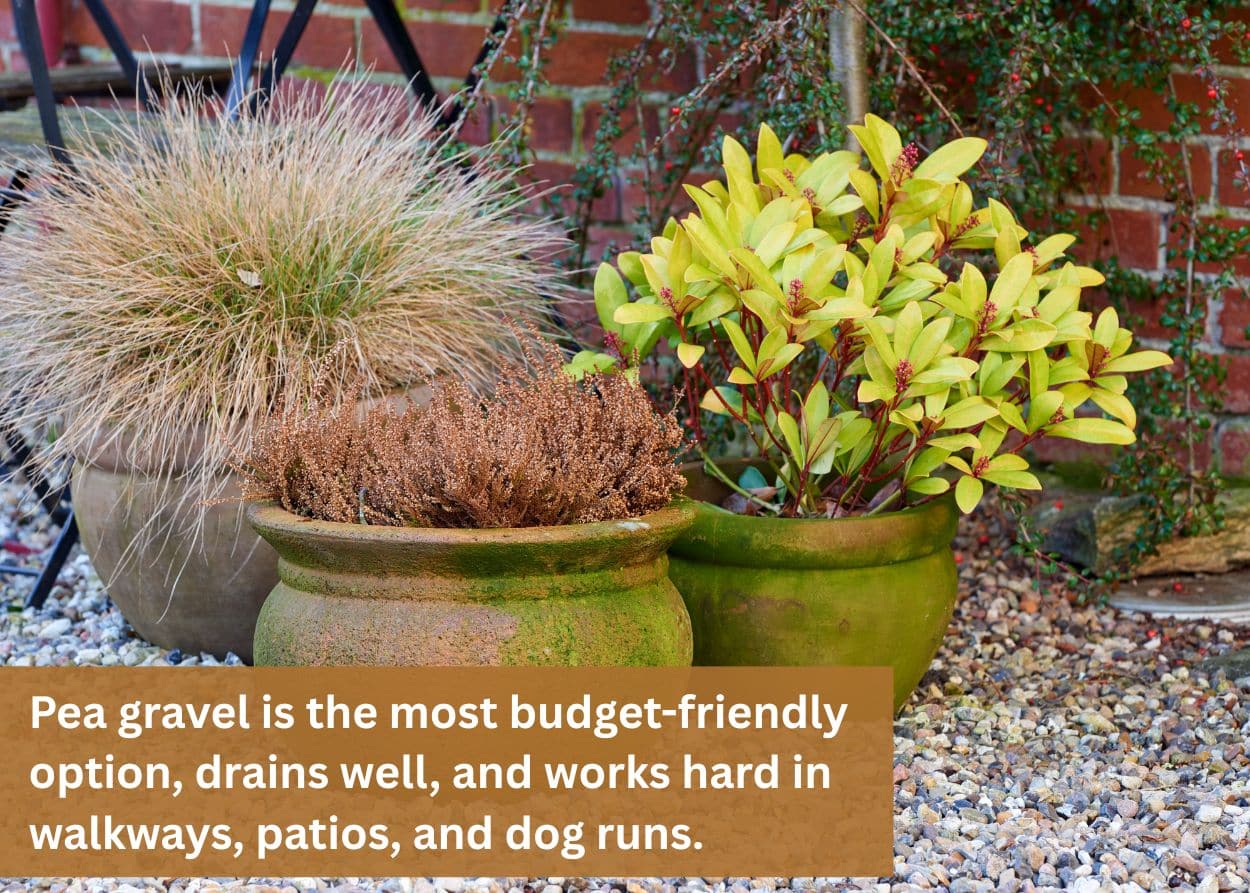
- Pea gravel. Small, rounded, and the most budget-friendly option on this list. Its tiny size means fewer gaps for weeds to sneak through, and it drains well, so it works hard in walkways, patios, and dog runs. According to Bob Vila, it's also a frequent filler around larger stones or between pavers.
- Crushed stone. Angular and rough-edged because it's mechanically broken down from granite, limestone, or basalt. That jagged shape is exactly why it's the go-to base material under patios and walkways. It promotes drainage and stays put once it's compacted.
- Marble chips. Crushed white or off-white marble gives beds a bright, formal look that suits Mediterranean and contemporary designs. There’s one catch: marble can raise soil pH over time, which is great news for alkaline-loving plants, but not for acid lovers like azaleas and blueberries.
- Lava rock. This volcanic rock is light, porous, and doesn't decompose, so it holds up well as a mulch alternative in fire pits and drought-tolerant beds. It's also noticeably cheaper to haul since it weighs less than half as much per cubic yard as river rock (more on that below). The tradeoff: it’s not comfortable to walk on.
- Boulders. Defined as anything too big for one person, boulders anchor retaining walls, create tiered beds, and work as focal points near a patio or entryway. They're sold by the ton and usually need equipment to place, so factor delivery into your budget.
An article in This Old House notes that pricing for all six runs anywhere from about $1 to $11 per square foot, depending on type, size, and how far it has to travel. Ask your supplier for a current quote on the specific stone you want.
7 Factors to Weigh Before You Buy
Picking a stone isn't just about what looks good in the bin at the yard. Here's what actually matters once it's in your yard for the next decade.
- Color. Do you want the stone to blend with your home's siding and roofline, or stand out as an accent? Light stone brightens shaded corners; dark stone leans modern but holds more heat.
- Size. Bigger stones are more proportional to large open spaces. Smaller stones fit more tightly into beds and walkways without overwhelming the design.
- Texture. Smooth stone is easier on bare feet and easier to clean. Rougher, angular stone grips better underfoot on slopes or near steps.
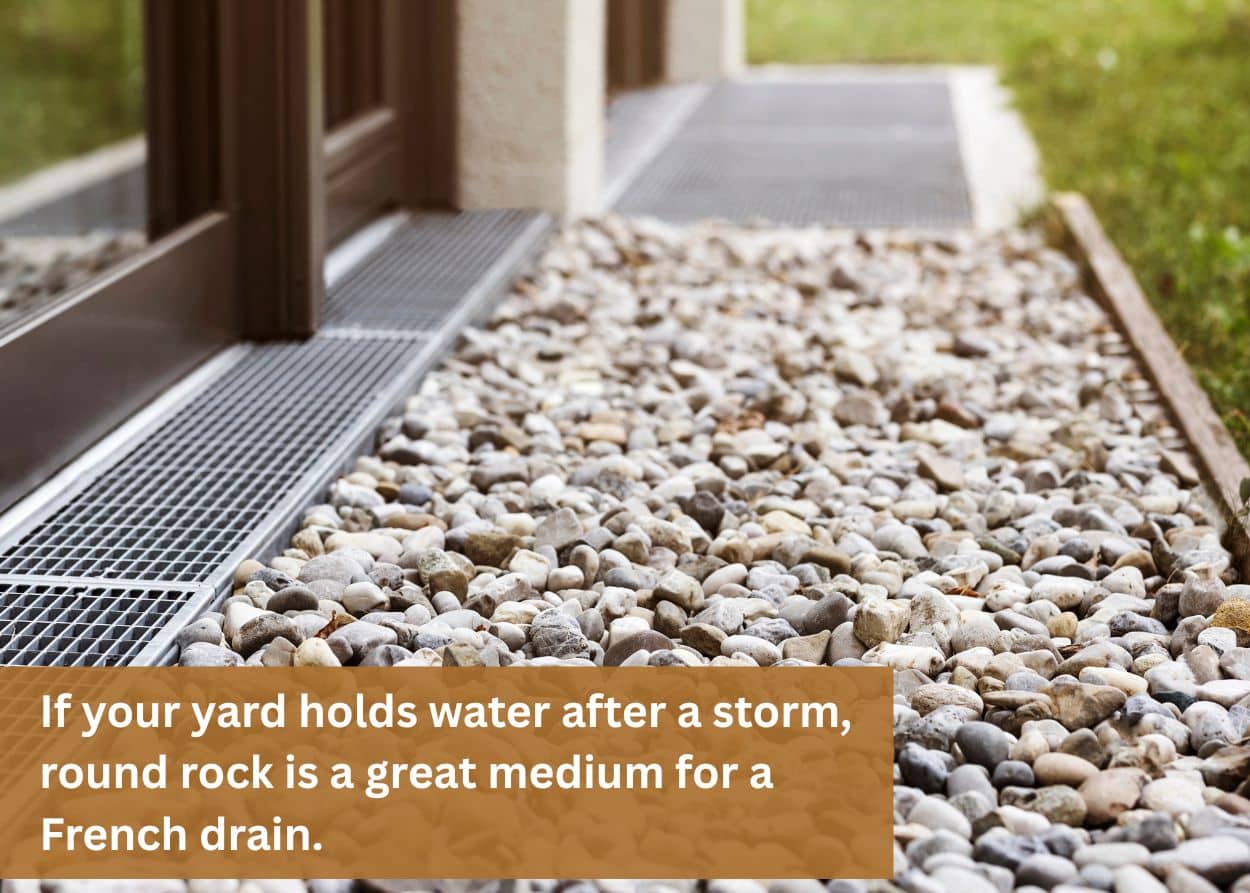
- Drainage. If your yard holds water after a storm, round rock is a great medium for a French drain.
- Maintenance. Do you have a lot of leaves shedding in the fall? Larger, rounded stones leave gaps where leaves and weeds collect. Smaller stones pack tighter and are easier to keep looking clean.
- Durability. In our part of Northwestern Maryland, South-Central Pennsylvania, and Northern West Virginia, freeze-thaw cycles can affect your rocks. Choose a stone that won't crack or shift as the ground heaves each winter.
- Architectural style. A cottage-style home calls for a different stone than a modern build. Match the stone's tone and shape to your home's existing lines before you commit to a truckload.
Best Places to Use Decorative Stone Around Your Property
Stone is a landscaping lifesaver in more ways than most homeowners realize.
- Garden beds and borders. A permanent, low-maintenance alternative to mulch that never needs an annual refresh.
- Walkways. Pea gravel and small river rock create an inviting, low-cost path, especially between stepping stones.
- Water features and dry creek beds. River rock and a mix of cobbles mimic natural flowing water, even where there's no water at all.
- Patios. Crushed stone makes a stable, well-draining base layer underneath pavers.
- Erosion control. On slopes, larger rock and riprap-style stone hold soil in place where grass or mulch would wash away.
Decorative Stone vs. Mulch: Which One Wins?
Here are the stone-cold facts: it depends on what you're covering and how much upkeep you want.
Stone costs more going in, typically two to three times as much as mulch, but it doesn't break down or fade, so you're not buying it again next spring. Mulch, on the other hand, feeds your soil as it decomposes and holds moisture better for plants that need it. If your bed is full of shrubs, perennials, or anything drinking regularly, mulch is still the better investment for plant health.
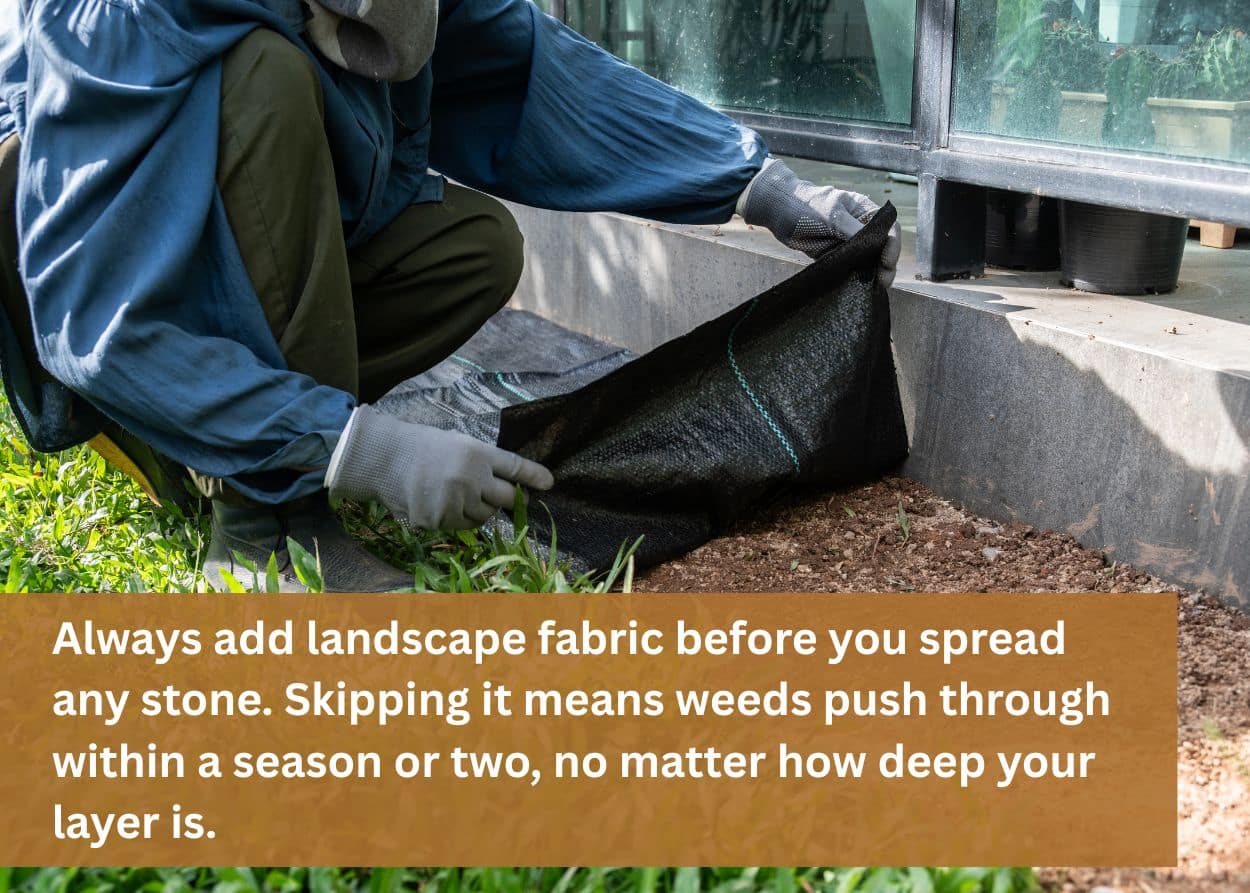
Weed suppression is trickier than people expect. Mulch blocks weed seeds from getting sunlight on their own. Stone needs a landscape fabric barrier underneath to do the same job long-term; otherwise, debris collects in the gaps, and weeds eventually find a way through.
So here's a simple way to think about it: mulch for beds where plants are the star, stone for walkways, drainage areas, and spots where you want a set-it-and-forget-it look for years.
How Much Stone Do You Actually Need?
Before you order a single ton, measure your space and do some math. You need to determine how much you’ll need in cubic yards. The formula is straightforward:
Volume (cubic yards) = Length (ft) × Width (ft) × Depth (in) ÷ 12 ÷ 27
A few notes to make this easier:
- Use 2 to 3 inches deep for decorative ground cover, and 3 to 4 inches if weed suppression is the priority.
- Weight varies a lot by stone type. River rock runs about 2,600 pounds per cubic yard, while lava rock comes in around 1,100 pounds, so the same volume of two different stones can mean very different delivery costs.
- Always add landscape fabric before you spread any stone. Skipping it means weeds push through within a season or two, no matter how deep your layer is.
- Order about 10% extra. Irregular bed shapes and settling always eat up more material than the math suggests.
Once it's down, maintenance is light: rinse off dust and debris a couple of times a year, pull the occasional stray weed, and top off low spots after a few years of settling.
Let Us Help You Pick the Right Stone the First Time
The trick to choosing decorative stone comes down to matching the right material to the right job, then getting the prep work right so it looks good for years, not months. But picking the right combination involves a lot of moving parts, so if you'd rather talk it through rather than measure it out yourself, stop by Ebyland's Cumberland location or give us a call.
We've been helping homeowners across Northwestern Maryland, South-Central Pennsylvania, and Northern West Virginia find the right mulch, stone, and landscape supplies since our family's earliest days on the sawmill, and we're happy to help you figure out what belongs in your yard.
Let this summer be an amazing year of landscaping. Contact us today to get started!